

Portrait of a Young Girl, by unknown artist
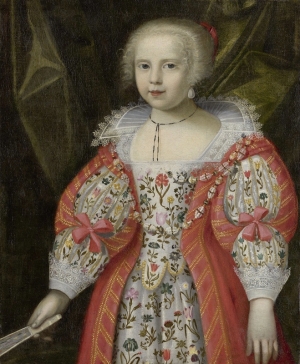
'Portrait of a Young Girl' is an early seventeenth century painting, now in the British Royal Collection, depicting a young, aristocratic English girl wearing an embroidered gown and a salmon red coat. The artist is unknown. Based on the garments worn by the girl the painting probably dates to c. 1625-1635.
Belgian Embroidered Flour Bags
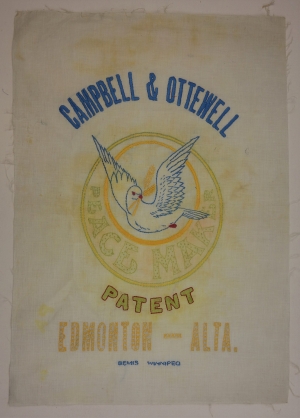
During the First World War (1914-1918), the American Commission For Relief in Belgium (CRB) was set up under the chairmanship of Herbert Hoover (1874-1964; he later became the 31st President of the USA). The aim of the commission was to provide food relief for war-torn Belgium. The CRB was eventually to ship millions of kilos of flour (but also other grains and sugar) to Belgium. These commodities were sent in cotton bags.
Lectern Fall
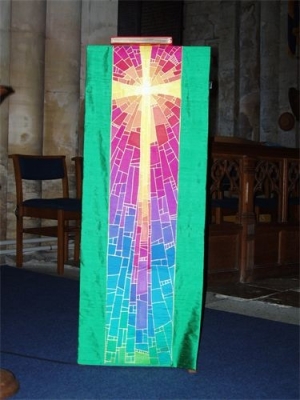
A lectern is a tall, narrow stand with a slanting top. Its primary function is to support books or documents, especially when someone is reading aloud from them. The word lectern derives from the Latin lectus (past participle of legere – 'to read'). In the Christian Church, a lectern is generally used to support a Bible from which the Scriptures are read aloud (a process called the ‘lessons’).
Wodaabe Hip Wraps
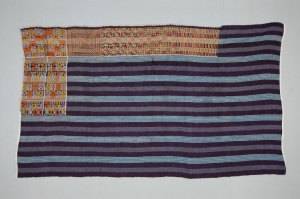
The Wodaabe are a sub-group of the Fula people, many of whom are nomads that live in the southern Sahara. The Wodaabe make use of various embroidered cloths and garments, especially during their annual dances. One of these garments is a rectangle made of sewn, handwoven strips of cotton in dark blue and light blue. This form is normally embroidered along one long edge and one short edge.
Wodaabe Men's Wrap-Around Kilts
The Wodaabe are a sub-group of the Fula people, who are originally nomads that live in the southern Sahara.
Wodaabe Long Tunics
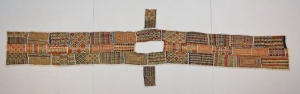
The Wodaabe are a sub-group of the Fula people, who are nomads that live in the southern Sahara. They are known for the high jumping dance carried out by the adolescent men during the Gerewol (Guérewol) ceremonies in order to impress potential brides. There are various dances (such as the fijo and the yake) held during the Gerewol and for one of them the men wear a plain leather ‘skirt’ under a long, open sided tunic.
Wodaabe Short Tops
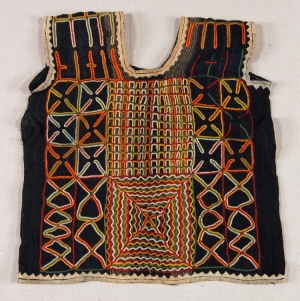
The Wodaabe are a sub-group of the Fula people, and many of whom are nomads that live in the southern Sahara. Some of the Wodaabe women wear a short, sleeveless top, especially on festive occasions such as the Gerewol (Guérewol) dance ceremonies, when adolescent men dance in order to impress a potential bride. These tops are usually worn with a skirt of some kind.
Wodaabe Embroidery
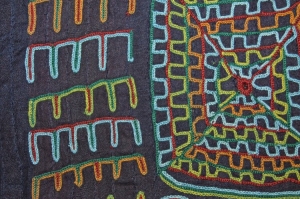
The Wodaabe are a sub-group of the Fula people, and many of them are nomads that live in the southern Sahara, notably in southern Niger, northern Nigeria and the western parts of the Central African Republic. The Wodaabe are well-known for their high jumping dance, carried out by the adolescent men during the Gerewol (Guérewol) courtship ritual ceremonies, in order to impress potential brides.
Saward, Blanche C.
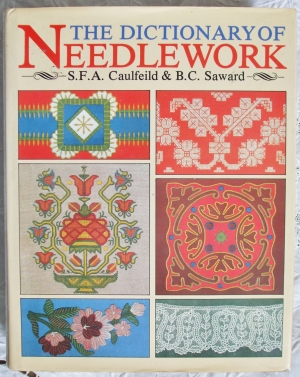
Blanche Catherine Saward (no dates found) was a British writer, who is known for The Dictionary of Needlework, published in 1882, in collaboration with Sophia Caulfeild. There is also a companion volume, Supplement to the Dictionary of Needlework (London: Gill), which came out in 1887.
Caulfeild, Sophia Frances Anne (1824-1911)
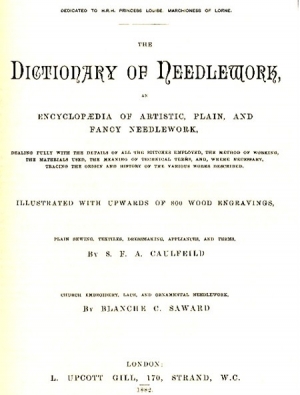
Sophia Frances Anne Caulfeild was born in Teighmouth (Ireland) in 1824, the daughter of Edwin-Toby Caulfeild and Frances Sally (née Irwin). The Caulfeilds were a local, aristocratic family of Anglo-Irish origins based in Raheenduff (County Wexford, Ireland).