

Ubrus
The Russian word ubrus (убрус) means a towel, napkin or cloth cover (such as a small table cloth).
Vandyke

A vandyke (or vandyke edge) is a seventeenth century term referring to an edge of a decorative textile, as for instance a trimming, that has a deeply indented, ornamental triangular form.
Needlewoman Shop
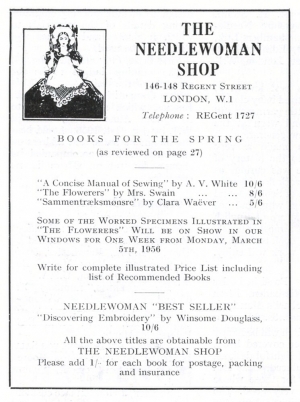
'The Needlewoman Ltd' (London, England) was registered in October 1928 as a retail shop in Regent Street, London (later nos. 146 and 148 Regent Street). The shop was partially owned by the embroidery designs, material and thread company, William Briggs & Co Ltd. It was seen as a major source of threads, materials, designs as well as a source of inspiration for those working with decorative needlework throughout the world.
Needlewoman
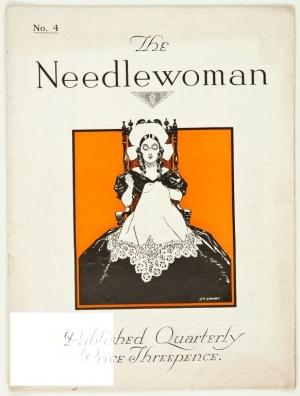
The Needlewoman (and later called Needlewoman and Needlecraft) is a journal that was published in London between 1928 and 1970. It was originally produced by The Needlewoman Shop (London) and William Briggs & Co. (Halifax, England).
Thomas, Mary (1889-1948)
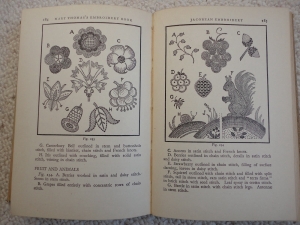
Mary Thomas (née Hedger) was an English writer about embroidery, who published mainly in the 1930's and early 1940's. She was born in Cheltenham, Gloucestershire (England). She went to New York in 1911 with the aim of becoming a fashion journalist. During the First World War (1914-1918) she served with the Women’s Nursing Corps in France.
Sudbury Pall
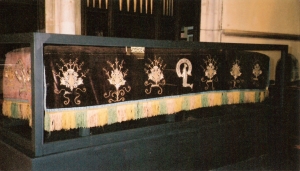
The Sudbury pall, also called the Alderman's pall, is a fifteenth century ceremonial cloth that was draped over coffins in Sudbury (Suffolk, England). It was originally used in St. Gregory’s Church, Sudbury and was later moved to St. Peter’s Church in the same town. It is currently housed in the Ipswich Museum (Suffolk).
Hearse Cloth
See pall.
Pall
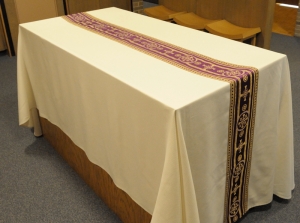
One of the various meanings of the English word 'pall' is that of a large cloth usually of black, purple or white velvet, which is spread over a coffin, hearse or tomb. This meaning came into general use by the mid-fifteenth century. Several embroidered palls from England from the fifteenth and sixteenth centuries have survived, including the Bakers’ Pall, the Fishmongers’ Pall, the Sudbury Pall and the Fayrey Pall.
Tepsi Örtüsü
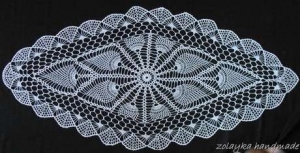
A tepsi örtüsü is a relatively small, generally round, embroidered tray cloth used in many parts of the former Ottoman Empire. It may be compared to the much larger floor spreads, called sofra and sofra bezi.
Sofra Bezi
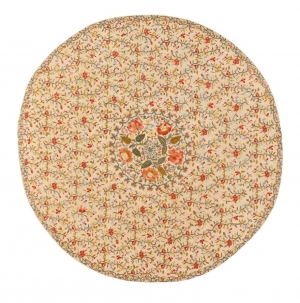
A sofra bezi is a circular, embroidered floor spread that was used as a table setting in traditional, urban Ottoman houses. They were spread on the floor. Early examples of these floor spreads were rectangular and made out of narrow, embroidered strips of cloth. These were called sofra.