

Stanhope Adult Education Institute
Schwalm Embroidery

Schwalm embroidery (Schwälmer Weißstickerei) is a form of whitework embroidery that originated in Germany. In particular it is said to have come from the Schwalm region of Hesse Province, in West Central Germany (hence its alternative name: Hessenstickerei or ‘Hessen embroidery’).
Hessenstickerei
See Schwalm embroidery.
Schwälmer Weissstickerei
See Schwalm embroidery.
Embroidery Printing Roller
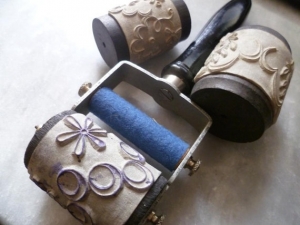
Embroidery printing rollers are small, hand-held devices used to transfer a design. They were popular in some European countries during the nineteenth century and were often used as an aid to the production of domestic embroidery, especially for the decorative edges of undergarments. Removable rollers with suitable handles were produced by various commercial firms (especially in France) and sold for the domestic market.
Keiskamma Art Project
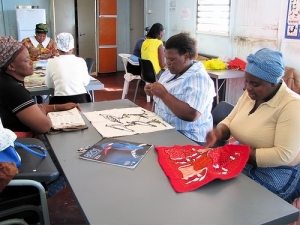
The Keiskamma Art Project includes a group of about 130 South African artists and craftspeople who initially specialised in hand embroidery and tapestry weaving, but who have now expanded to include other media. The Keiskamma Art Project was set up in 2000 by Dr. Carol Hofmeyr (South Africa), Jan Chalmers (UK) and Jackie Jezewski (France).
Keiskamma Trust
Point de Milan
Point de Milan is a type of tape lace that was produced in Belgium in the first half of the twentieth century. It uses straight tapes with needlepoint fillings.
Table Cover
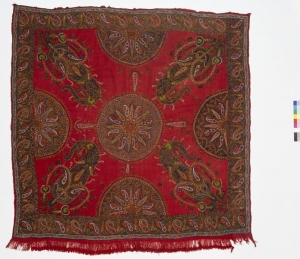
A table cover is a textile of some kind that covers all or part of the top of a table. It can take the form of, for example, a table carpet, table cloth or table runner.
The Royal Hellenic School of Needlework and Laces, Athens
The Royal Hellenic School of Needlework and Laces, Athens, was an industrial school set up in 1897 for the production of textiles, and especially that of embroidery.