

Porcupine Quills

A porcupine is a rodent with a coat of sharp spines or quills, which are used to protect the animal against predators. Porcupines belong to the family of the Erethizontidae (genera: Chaetomys, Coendou, Echinoprocta, Erethizon and Sphiggurus) or of the Hystricidae (genera: Atherurus, Hystrix and Trichys). Porcupines are indigenous to Africa, the Americas, Europe and Southern Asia.
Orphrey
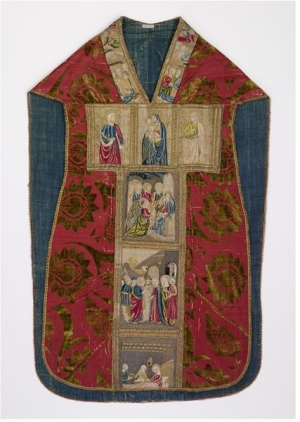
An orphrey is an applied decorative band, usually richly embroidered, on a Christian ecclesiastical vestment, such as a cope, chasuble or dalmatic. According to the Shorter Oxford English Dictionary, the term orphrey derives from the Old French orfreis (mod. orfroi), from the medieval Latin auriphrygium, which comes from Latin aurum (gold) and Phrygius (Phrygian). Compare Dutch: aurifries.
North American Quillwork

North American quillwork is a form of decorative needlework that makes use of porcupine or bird quills. Quillwork from North America has been a focus of much study, although it is incorrect to believe that quillwork is exclusive to this region, as it is also carried out in Africa.
Native American decorative needlework

A wide variety of materials was used to decorate indigenous clothing in North America before contact with the Europeans. These decorative materials included bone, feathers, fur, leather fringes, quills (North American quillwork) and shells.
Knitting
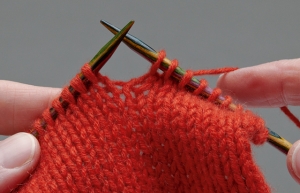
Knitting is a method by which yarn is used to create a looped fabric. The earliest recorded English usage of the word ‘knitting’ dates from 1598. Technically, knitting is not a form of decorative needlework, as a sewing needle is not used in its production. Nevertheless, it often features in publications about needlework.
Kiswa al-Kabira
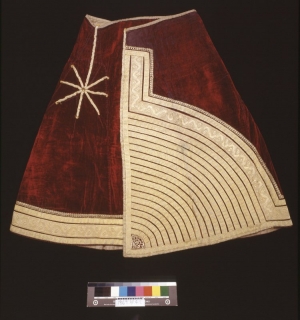
The kiswa al-kabira is an elaborate outfit worn until the mid-twentieth century by wealthier (Sephardic) Jewish women in the Maghreb (Northwest Africa). The term kiswa al-kabira means ‘great dress.’ The outfit was decorated with gold braids and gold thread embroidery. The outfit appears to have originated in Andalusia, where it was called the traje de berberisca.
Kiswa
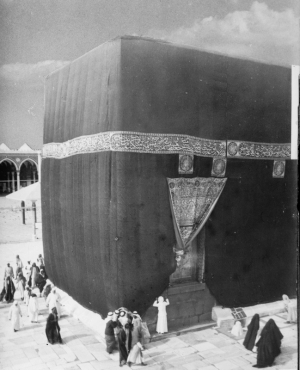
The kiswa is the embroidered cloth covering of the Ka`aba, a cubical building in the al-Masjid al-Haram mosque, Mecca, Saudi Arabia. The Ka`aba is about 15 m high, with a circumference of 47 m. It has one door, which is set about 2 m above the ground. During the annual hajj (pilgrimage) to Mecca, Muslims walk around the Ka`aba seven times.
Kharqa Oasis (Egypt)
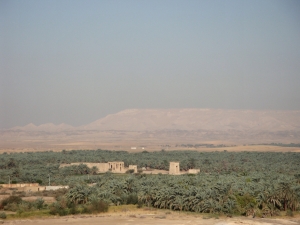
The Kharqa oasis is the most southern and largest of Egypt’s western oases. It is located about 200 km to the west of the Nile in the Libyan, or Western Desert. The oasis is about 160 km long and up to 80 km wide. The historic Darb el-Arbain trade route, running north-south between Middle Egypt (notably Assyut) and Sudan, passes through Kharqa. The oasis has been home to various ethnic groups since the early Dynastic period.
Kerdasa Embroidery (Egypt)

Kerdasa embroidery is associated with the town of Kerdasa, now a suburb of Cairo, Egypt. For centuries, Kerdasa was known for the production, by men, of woven textiles, which were traded along the east-west routes from Egypt to Libya, often via the Siwa oasis.
Kellis Embroideries (Egypt)
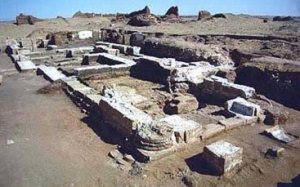
Kellis in Egypt is the old name for the modern-day site of Ismant el-Kharab, ‘Ismant the ruined’. It is an ancient settlement that lies about 11 km northeast of Mut, the capital of the Dakhla oasis. Excavations at Kellis began in 1986, and from 1991 the Kellis excavations were carried out by Monash University, Australia. The main occupation phases date from the early to late Roman Periods (first to the fifth centuries AD).