

Fayrey Pall
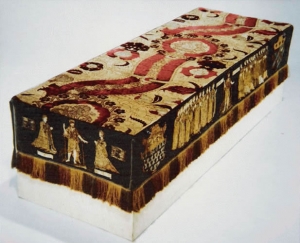
The Victoria and Albert Museum in London houses the so-called Fayrey Pall. This funeral pall measures 255 x 134 cm and was made in England between 1470 and 1530. It is made of red, silk velvet (probably originating from Italy) and embroidered with silk and metallic thread. It has a metallic fringe.
Hohmichele Princess
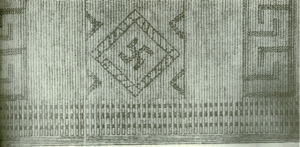
Small fragments of an embroidered woollen chemise were discovered at the cemetery of Hohmichele, near the hillfort of Heuneburg, in southern Germany. The burial ground is dominated by an 85 metre high tumulus, which contained a number of burials. The tumulus was first excavated between 1936 and 1938, and again between 1954 and 1956.
Pazyryk Needlework
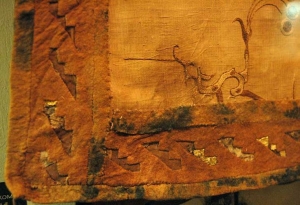
The kurgans of Pazyryk, in the Altai mountains of southern Siberia, yielded the burials of noblemen who had been buried there in the fourth and third centuries BC. The tombs included many textiles, including Chinese silks with embroideries. The first of the barrows (kurgans) was excavated in 1929; others were studied between 1947 and 1949 by Sergei Ivanovich Rudenko.
Chasuble from Lower Saxony, 15th Century
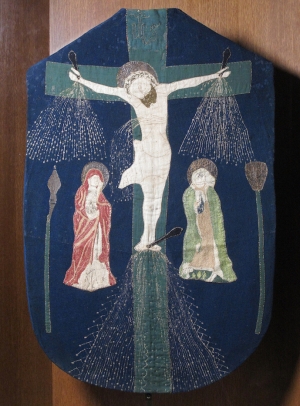
The Metropolitan Museum of Art, New York, houses a remarkable chasuble that dates to the fifteenth century and originates from Lower Saxony in Germany. The chasuble is made of wool with appliqué motifs in linen, with silk thread embroidered details. The figure of Christ is drawn in brown ink. A parchment strip may have been gilded.
La Grande Broderie
La Grande Broderie was the name given to a set of gold-embroidered ecclesiastical garments and textiles designed in the mid-fifteenth century by Pierre de Villant.
Pollaiolo, Antonio, 1429/33-1498
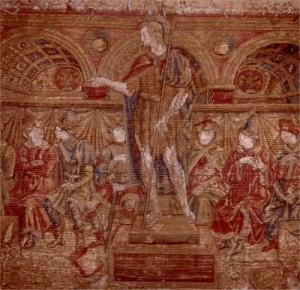
Antonio Pollaiolo was a fifteenth century Italian engraver, goldsmith, painter and sculptor, who is mentioned by the writer and artist Vasali (click here).
Embroidery Statutes by Guillaume de Hangest, Paris
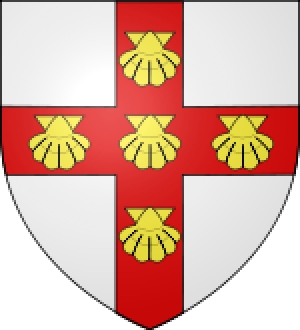
In 1303, the then Provost of Paris, Guillaume de Hangest, signed specific statutes for the corporation of the embroiderers and embroideresses in Paris. They are the first of this type ever drafted in western Europe. One of the rules says that gold work should be worked with silk thread. Another rule forbids embroiderers to work with candlelight, since their work would simply be inferior to that worked by daylight.
Bury St Edmunds, Mabel of

Mabel of Bury St Edmunds was a thirteenth century English embroideress, whose name is often mentioned in connection with the production of opus anglicanum. Her name is linked to King Henry III (1216-1272), for whom she worked various embroideries.
Mitre from Namur, Belgium
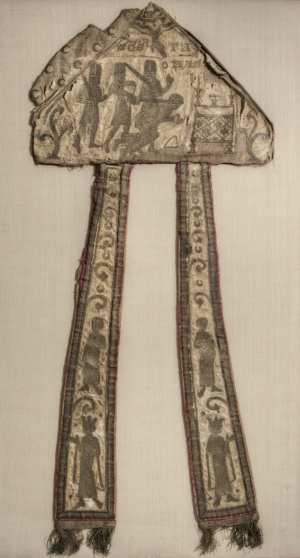
The Musée Provincial des Arts Anciens du Namurois, Namur, Belgium, houses a mitre that is embroidered with silver-gilt and silver thread, and coloured silk embroidery, worked with underside couching, split stitch and stem stitch on a silk ground material. The mitre is 18.8 cm high and 28 cm wide.
Embroidered Garment from Bronze Age Skrydstrup
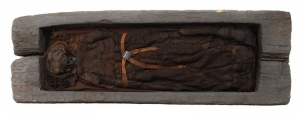
The Early Bronze Age burial mound of Skrydstrup, southern Jutland, Denmark, has yielded a very early example of needlelace, from the sleeve and neckline of a garment buried together with a young woman in an oak coffin. The burial mound was excavated in 1935 and the remains have been dated to c. 1300 BC.