

Metal thread embroidery is a form of decorative needlework that uses one or more different types of metal thread. This type of work is much more expensive than using ‘normal’ threads, such as linen, silk or wool, and as a result is associated with status and wealth, whether it is secular or religious in nature.
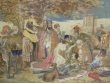
The term tapestry refers particularly to a type of woven cloth. However, the term is also used to describe a piece of stitched embroidery worked on a canvas ground, such as Berlin wool work. The famous Bayeux tapestry, with its embroidered decoration (couching and laidwork), is perhaps one of the most famous examples.
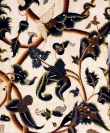
Wool work is a form of decorative needlework made from woollen threads. This type of embroidery is sometimes called crewel embroidery, but the term wool work actually covers a wider range of embroidery forms. One popular nineteenth century form of wool work in various parts of the world was Berlin wool work.
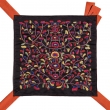
Subo (수보) is embroidered pojagi cloth. Subo was used in Korea, among others, for wrapping gifts for newly engaged couples. The name derives from su for embroidery, and bo for pojaki/bojaki, or even bo. The cloth was often made from a silk or cotton ground material.

Pojagi is a traditional patchwork cloth from Korea. It is also known as bojagi or bo. It is made by sewing together irregularly shaped pieces of cotton, silk, hemp or ramie cloth. The resulting square or rectangle is used to wrap, store or carry a variety of objects, such as bedding, Buddhist scriptures, food or gifts.
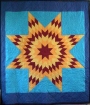
The pattern of a star quilt is composed of radiating diamonds and triangles in different colours. It has assumed special significance in several North American Indian nations. The design is especially associated with Plains Indians.

A star pattern is a decorative design of diamond and triangular shaped pieces of coloured fabric sewn together for a quilt. The pattern may be a large, single star with radiating diamonds or triangles, or multiple stars joined together.
More...

Roanna Wells is a fine-art artist based in Sheffield (UK). She trained in embroidery and applies this technique to provide for “the conceptual use of mark making and an expressive line, by using stitch as a drawing tool.”

A talisman (late Greek: τέλεσμα) is any object (with or without an inscription or images) that is alleged to bring luck or other benefits to its owner and/or wearer.