
Runner is a nineteenth century term for people who embroidered machine nets using running or darning stitches.

The Rajah quilt is a convict quilt produced in 1841, which is now in the National Gallery of Australia, Canberra (acc. no. NGA 89.2285). It was produced by an estimated 29 female prisoners being transported to Australia on the British convict ship, the Rajah.
Raised gobelin stitch is a nineteenth century English term given to a gobelin stitchthat is worked over a cord to create a padded or raised effect.
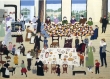
A quilting bee is a social gathering during which a quilt is made. The term is commonly used throughout the USA. The word ‘bee’ was used in colonial America to refer to different forms of communal work that benefited a neighbour, for example, a logging bee to fell wood or a husking bee to strip maize.

Plastic canvas is an embroidery canvas made from plastic. It has been commercially available since the 1970's. It is made from a lightweight vinyl with regularly spaced holes. It comes in various mesh counts, notably 5, 7, 10 and 14 holes per inch. The most widely used form is the 7-mesh version.
Pattern maker is an eighteenth century English term for a man or woman who professionally made embroidery and lace patterns.

Passing is a form of thread used in metal thread embroidery. It consists of a thin strip of metal wound around a thread core, usually of cotton or silk. Some passings have a white or grey core, others are yellow or orange. This is said to be linked with whether silver (white/grey) or gold (yellow/orange) metal thread is being used. Another explanation is one of economics: an undyed core is cheaper than a yellow/orange dyed one.
More...
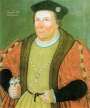
Elizabeth Philip was an embroiderer and silkwoman living in London in the first half of the sixteenth century. She made and dealt in silk trimmings and accessories, as well as making embroidered costumes for court events over a period of at least 26 years.

Needlerun is a form of embroidered net lace that uses a hand-knotted net (filet) or machine-made net (tulle) and is decorated using a running stitch. Limerick (run) lace is a form of needlerun using machine-made net.
Marseille quilt is a form of cloth with machine printed patterns resembling hand-stitched quilting.

The so-called Maaseik embroideries are believed to include the oldest extant Western European embroidered pieces of fabric. They are incorporated into a medieval ecclesiastical vestment, namely a chasuble (casula). The chasuble and related textiles are housed in the Sint-Catharina (St. Catherine) Church, Maaseik, Belgium. The chasuble is now known as ‘The chasuble of Sts Harlindis and Relindis’.