

Hindeloopen Sampler from AD 1701
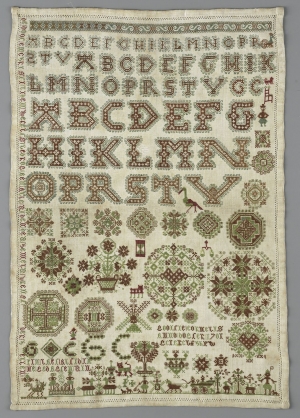
The Rijksmuseum in Amsterdam holds a remarkable sampler (acc. no. BK-NM-9987). It dates to the early eighteenth century and was made in the small town of Hindeloopen in Friesland, in the north of The Netherlands. The ground material is made of linen, while the embroidery is made with silk, using Algerian eyelet, back stitch, cross stitch, double running stitch, hem stitch and staying stitch.
View of Dordrecht, The Netherlands
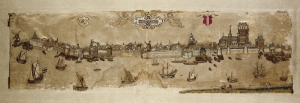
The Rijksmuseum in Amsterdam, the Netherlands, holds a strip of silk cloth embroidered with silk thread and providing a view of the town of Dordrecht. The textile measures 54.5 x 15.5 cm. Included in the embroidery are the coat of arms of Holland and the town of Dordrecht, and the text ANNO 1607. In the bottom right hand corner it says: DAMIS.V.BERNASIE (Damis van Bernasie).
Letter Pouch from Constantinople
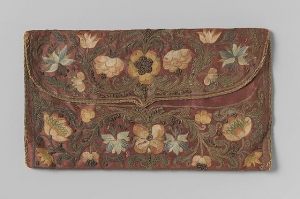
The Rijksmuseum in Amsterdam recently acquired an embroidered letter pouch (acc. no. NG-2011-25) that belonged to the Dutch ambassador to Istanbul (Constantinople), Cornelis Calkoen (1696-1764).
Mughal Wall Hanging
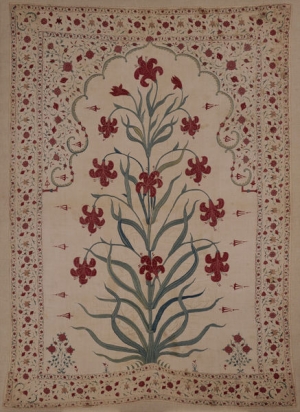
An embroidered Mughal wall hanging or curtain (or prayer mat?), measuring 117 x 81.25 cm, now housed in the Victoria and Albert Museum (acc. no. IS 168-1950), is a beautiful example of Mughal period art from India.
Persian Embroidery (Europe)
See broderie perse.
Mughal Embroidered Coat
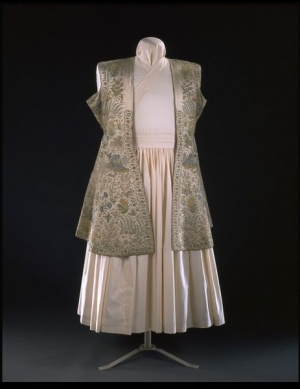
The Victoria and Albert Museum in London houses a beautifully embroidered coat that dates back to the early seventeenth century and originates from Mughal India (acc. no. IS 18-1947).
Stuffed Quilting
See trapunto.
Sicilian Tristan Quilt

The Sicilian Tristan quilt, also known as the Tristan and Isolde quilt or the Guicciardini quilt, is perhaps the oldest extant European quilt. It dates to the late fourteenth century, and was made in Sicily. It shows scenes from the story of Tristan and Isolde.
Pateh
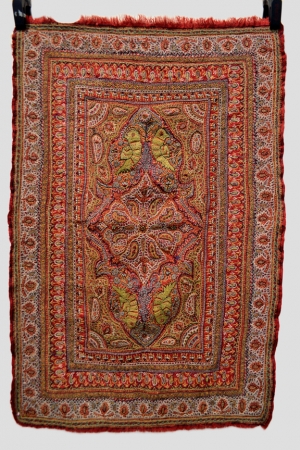
Pateh (Farsi: پته ), or pateh-duzi is a style of Iranian embroidery, in particular from Kerman province in the southeast. It may be linked to local carpet weaving, and many of the embroidered designs recall carpet motifs, such as the toranj (bergamia), sarv (cypress) and the buteh (paisley), but also the sun.
Alford, Lady Marian (1817-1888)
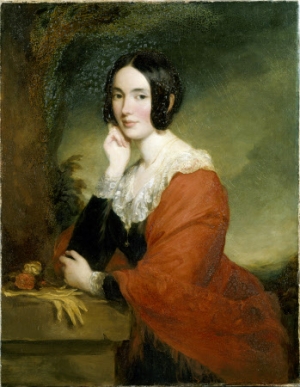
Marianne Margaret Compton, Viscountess Alford (generally known as Lady Marian Alford), was an art patron and author, who was particularly known for her work to support embroidery and the Royal School of Needlework. She was the author of Needlework as Art, an influential book published in 1886.