

Aida

Aida is an even weave cloth often used for counted thread embroidery. The material is mesh-like in construction for ease of stitch counting and has enough stiffness so that an embroidery frame or hoop is not necessary. Older forms of Aida are made of linen, while most twentieth-century examples are of cotton.
Royal School of Needlework

The Royal School of Needlework (RSN) is a British hand embroidery school founded in 1872. It was originally called the Kensington School of Needlework, and thereafter the Royal School of Art Needlework. The word ‘Art’ was dropped in 1922.
Robe Royal (UK)
See the Supertunica.
Chasuble

A chasuble is a Christian liturgical vestment used in the Eastern and Western Churches. The term chasuble derives from the Latin word casula (cloak [previously called a paenula] literally a little house or cottage, casa), via the Late Latin term casubla, meaning a garment with a hood.
Zabid decorative dresses (Yemen)
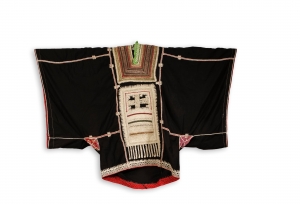
The town of Zabid lies to the south of Bayt al-Faqih, along pilgrimage and trade routes across the coastal Tihamah plain, about 50 km south of al-Hudaydah and 150 km southwest of the Yemeni capital of Sana`a. Traditionally, women from the Zabid region have worn two styles of embroidered dresses: daily and festive versions.
Y-Shaped Cross
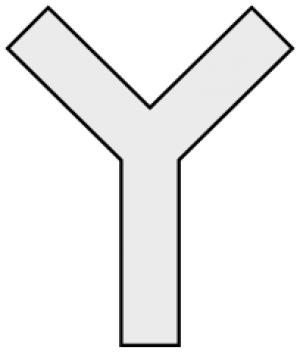
The Y-shaped cross, or forked cross, is a Christian symbol. It has been popular in western Europe since the early thirteenth century and its use later spread to other parts of the world. This form of cross is also known as the crucifixus dolorosus, the furca, the ypsilon cross, and occasionally the ‘robber’s cross’ or ‘thief’s cross’, because it was said to be the cross used for the two thieves who were crucified together with Jesus Christ.
Wadi Dawan Embroidered Dresses (Yemen)
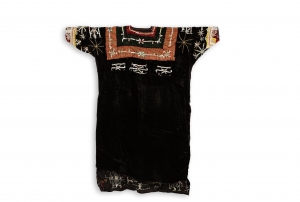
Wadi Dawan is a desert valley in central Yemen, in the Hadramaut Governorate. During the twentieth century, brides from the Wadi Dawan often wore a wide dress with very short sleeves, a square neck opening and a train. The majority of the decoration is on the back of the garment. The decoration generally consists of appliqué cloth, sequins, as well as metal thread couching and embroidery around the neck opening.
Virago Sleeve
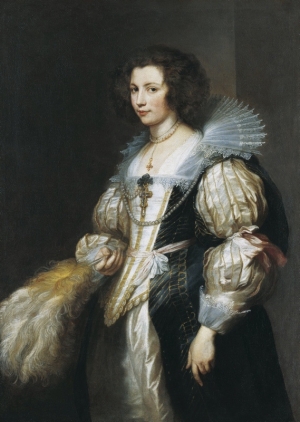
A virago sleeve is a full, paned sleeve, used in the early seventeenth century in western Europe. It was made from a series of cloth strips, which were gathered into two puffs by a ribbon or cloth band just above the elbow. The main sleeve strips were often embroidered. This type of sleeve was fashionable for women’s clothing in the 1620's and '30's. GVE
Supertunica (UK)

The Supertunica, also called the Robe Royal, is a full-length, sleeved coat with a belt, made of gold silk cloth and with embroidery down the front opening. The Supertunica forms part of the coronation garments worn by British monarchs. The form of the Supertunica derives from one of the Christian ecclesiastical vestments, and is said to have been inspired by Byzantine garments.
Milliners Needle
See straw needle.